The 19-18 Game
The stall that created the shot clock. In 1950 the Fort Wayne Pistons beat the Minneapolis Lakers 19-18 by holding the ball. The ugly result helped bring the 24-second shot clock in 1954.
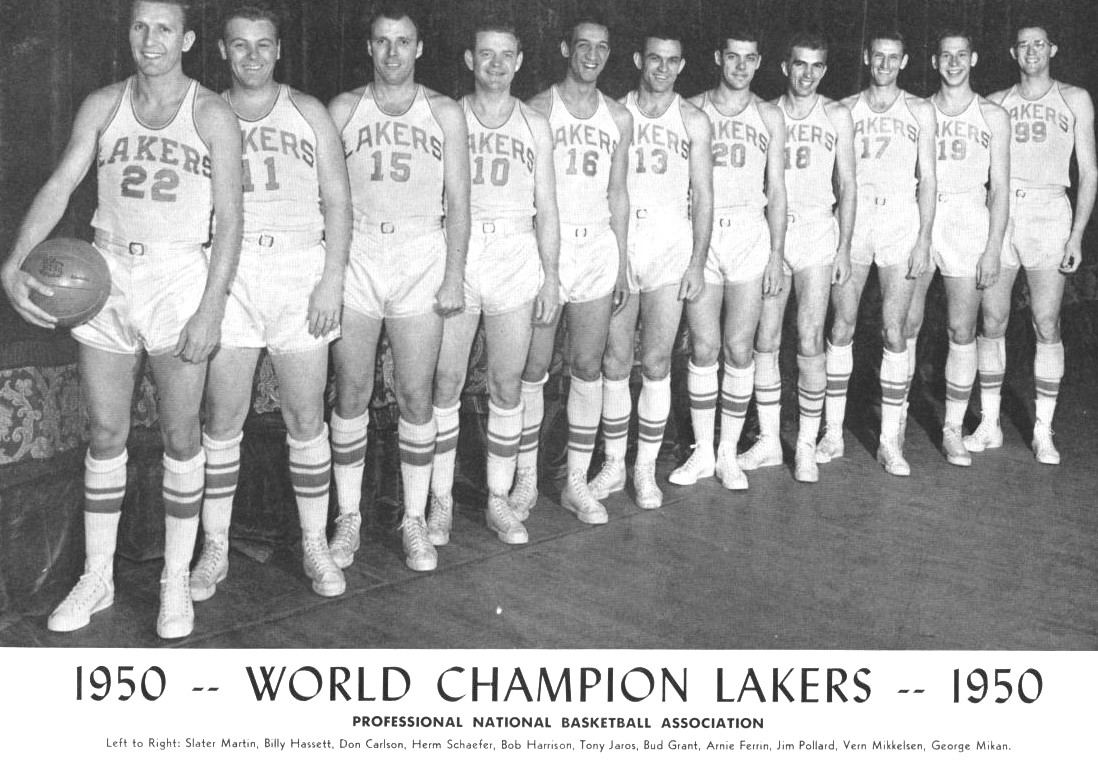
The 1950 Minneapolis Lakers: Unknown author, Public domain
How to beat a giant: do nothing
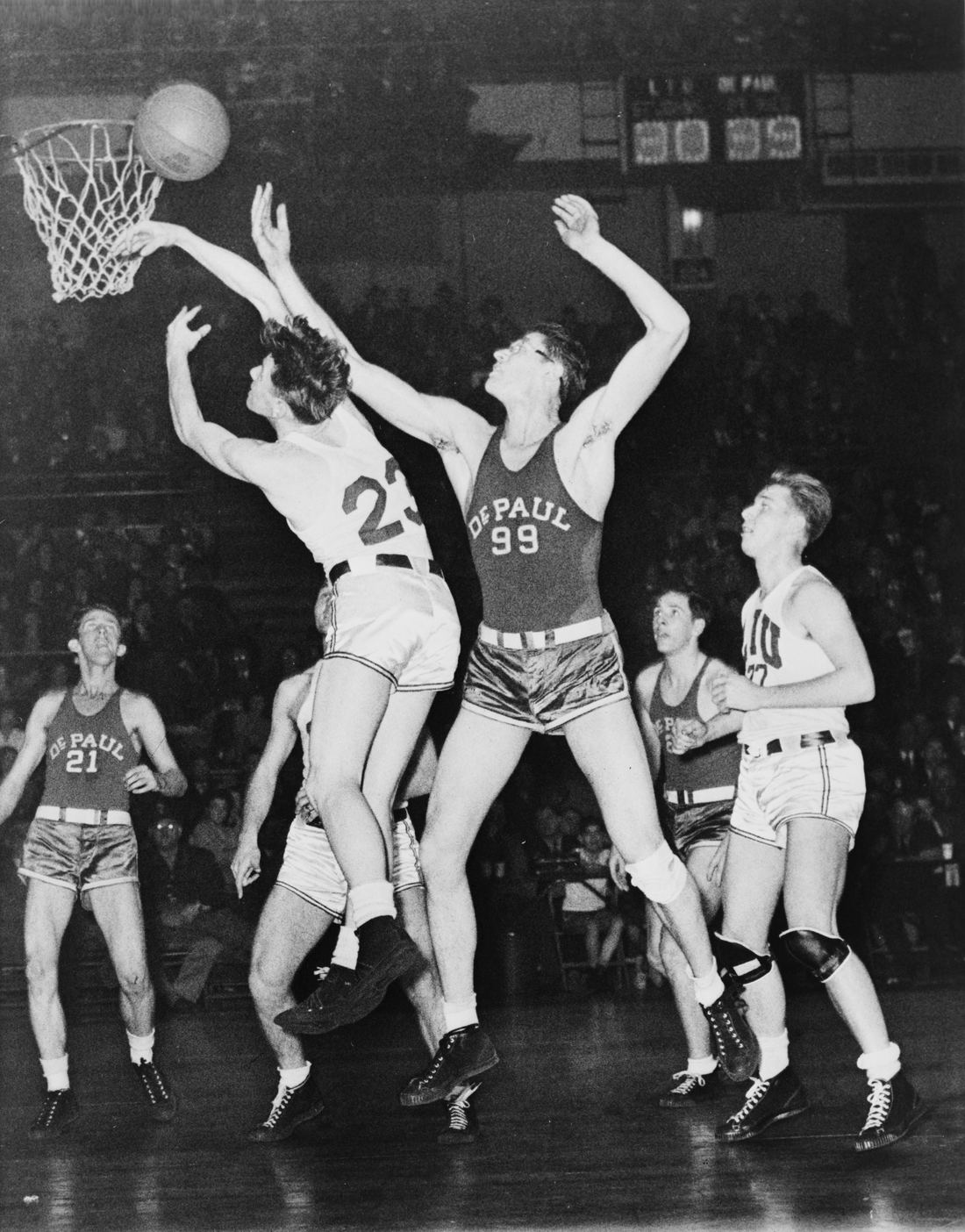
In 1950 the Minneapolis Lakers were the league's powerhouse, built around George Mikan, a 6 foot 10 center who was nearly impossible to stop near the basket. When the Fort Wayne Pistons visited Minneapolis on November 22, 1950, their coach came up with a plan that was simple and maddening: keep the ball away from Mikan by not shooting it.
There was no shot clock in those days. A team with the lead, or even a team that just wanted to slow the game down, could hold the ball as long as it liked.
An NBA game once ended 19 to 18
The 1950 Pistons-Lakers game ended 19-18 due to stalling, which led to the 24-second shot clock in 1954.
YouTube @FlyBaller (launching soon). Photos in this Short: 1950 Minneapolis Lakers.jpeg - Unknown authorUnknown author (Public domain) via Wikimedia Commons | St bona vs canisius game 1949.jpg - Unknown authorUnknown author (Public domain) via Wikimedia Commons | GeorgeMikan.jpg - New York World-Telegram and the Sun staff photographer (Public domain) via Wikimedia Commons | The Oncenter War Memorial Arena.JPG - Zchen46 (CC BY-SA 3.0) via Wikimedia Commons | Onondaga County War Memorial side.jpg - Crazyale (Public domain) via Wikimedia Commons | Syracuse
Forty-eight minutes of waiting
So the Pistons passed, dribbled and waited. The Lakers stayed back near the basket instead of chasing. Long stretches went by with almost nothing happening, and the crowd booed. The halftime score was in the low teens.
Mikan scored 15 of his team's 18 points. With the Lakers clinging to a one point lead late, Fort Wayne's Larry Foust put up a shot in the final seconds that fell, and the Pistons walked off with a 19 to 18 win. It remains the lowest scoring game in league history.
Players later remembered how strange it felt. Defenders stood around, shooters waited for openings that never came, and even the referees had little to do. Each team made only a handful of field goals all night.
The fix: 24 seconds
The game was a win for Fort Wayne and an embarrassment for the sport. Fans did not pay to watch players stand still, and stalling showed up in other games too. Something had to change.
The answer came from Danny Biasone, owner of the Syracuse Nationals, who pushed for a clock that forced teams to shoot within a set time. He settled on 24 seconds by dividing the 2,880 seconds of a game by the roughly 120 shots he figured two teams took in a typical game. The 24-second shot clock arrived for the 1954-55 season, and scoring jumped almost immediately.
The legacy of a low score
Every fast break, every late-clock jumper and every possession that ends with the buzzer sounding traces back to that night in Minneapolis. The 19 to 18 game is a reminder that the rules of basketball were invented on the fly, and that sometimes the worst game ever played leads to the best idea.
Facts on this page were checked against these sources.
- The 1950 Minneapolis Lakers: Unknown author, Public domain
- George Mikan: New York World-Telegram and the Sun staff photographer, Public domain
- Short photos: 1950 Minneapolis Lakers.jpeg - Unknown authorUnknown author (Public domain) via Wikimedia Commons | St bona vs canisius game 1949.jpg - Unknown authorUnknown author (Public domain) via Wikimedia Commons | GeorgeMikan.jpg - New York World-Telegram and the Sun staff photographer (Public domain) via Wikimedia Commons | The Oncenter War Memorial Arena.JPG - Zchen46 (CC BY-SA 3.0) via Wikimedia Commons | Onondaga County War Memorial side.jpg - Crazyale (Public domain) via Wikimedia Commons | Syracuse Shot Clock Monument Close-Up.jpg - see file page (CC BY-SA 2.5) via Wikimedia Commons | Minneapolis skyline 51.JPG - AlexiusHoratius (CC BY-SA 3.0) via Wikimedia Commons | 2CR Dragoon Week 2024- Basketball Championship (8426539).jpg - U.S. Army photo by Spc. Austin Robertson (Public domain) via Wikimedia Commons
Text written by Fly Baller.
← Wilt Chamberlain's 100-Point GameBill Russell's 11 Rings →